
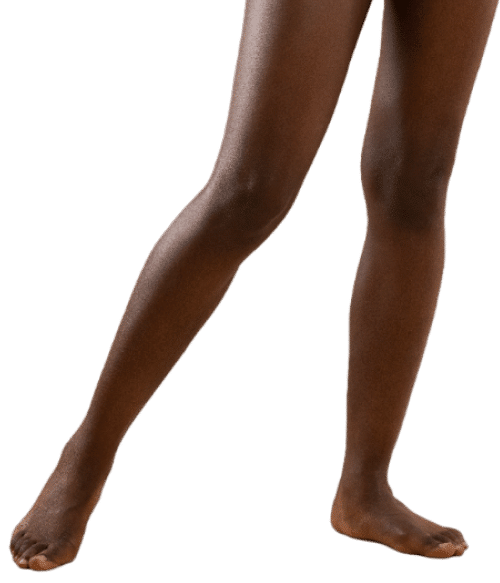
Visible spider veins can make some patients feel less comfortable showing their legs, but treatment does not have to involve surgery or a lengthy recovery. Visual sclerotherapy is a minimally invasive treatment designed to reduce the appearance of spider veins and certain small surface veins by treating them directly.
At Hawaii Vein Institute, Medical Director Dr. W.Y. Chung, MD, RPh, DABVLM, brings more than 23 years of experience in venous, cosmetic, and laser medicine. He is board certified by both the American Board of Venous & Lymphatic Medicine and the American Board of Emergency Medicine.
Through a detailed evaluation, Dr. Chung can determine whether visual sclerotherapy is an appropriate option for addressing visible veins and develop a treatment plan tailored to each patient’s needs.
What is Visual Sclerotherapy?
Visual sclerotherapy is a minimally invasive procedure used to treat spider veins and certain small surface veins. During treatment, a fine needle is used to inject a sclerosing solution directly into the targeted vein. This causes the vein to close, making it gradually less visible over time.
The treatment is generally used for veins that are clearly visible on the skin’s surface. Because these vessels are directly visible, the injections can typically be performed without ultrasound guidance.
Why Choose Visual Sclerotherapy?
- Effective: Clinically proven to reduce or eliminate the appearance of spider veins.
- Minimally Invasive: Non-surgical procedure with minimal discomfort and no need for general anesthesia.
- No Downtime: You can resume most of your routine activities immediately after the procedure.
- Fast: The treatment sessions are quick, usually taking no more than 30 minutes.
Results vary based on the number, size, and location of the treated veins, and some patients may benefit from more than one session.
What to Expect During Visual Sclerotherapy
- Consultation: Dr. Chung evaluates the visible veins, discusses symptoms and cosmetic goals, and determines whether visual sclerotherapy is the most appropriate treatment.
- Treatment: Using a fine needle, the sclerosing solution is carefully injected into selected veins. The number of injections and areas treated depend on the individual treatment plan.
- Follow-Up: Follow-up allows Dr. Chung to evaluate how the treated veins are responding and determine whether additional sessions may be beneficial.
Before and After Care
- Before: Avoid applying any lotion to your legs and refrain from anti-inflammatory medications for 48 hours before the procedure.
- After: We recommend wearing compression stockings for 1-2 weeks to support and compress the treated veins and to optimize healing.
Before and After
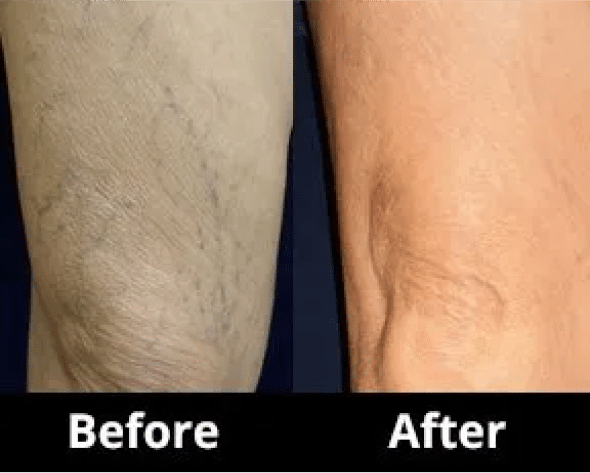
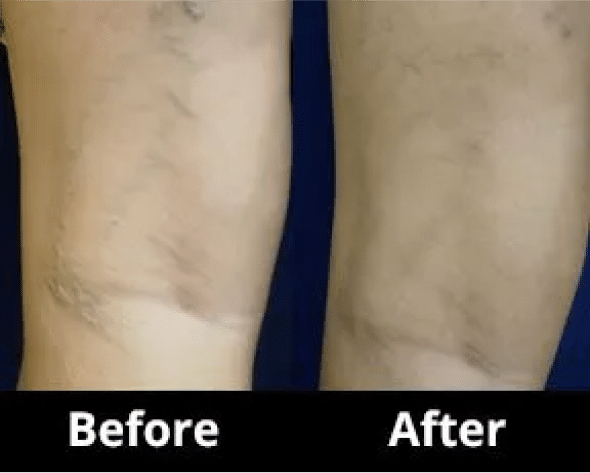
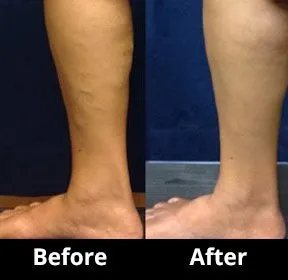
Before-and-after images can help illustrate the type of improvement that may be possible, although individual results vary.
Visual vs Ultrasound-Guided Sclerotherapy
Visual sclerotherapy is used to treat small veins that can be clearly seen at the skin’s surface. Because these veins are directly visible, Dr. Chung can target them without imaging guidance.
Ultrasound-guided sclerotherapy is used for veins that are deeper beneath the skin or cannot be reliably seen from the surface. Ultrasound imaging helps identify the affected vein and guide treatment more precisely. The most appropriate approach depends on the location, depth, and type of vein being treated.
Is Visual Sclerotherapy Right for You?
Visual sclerotherapy may be appropriate for adults seeking to reduce the appearance of spider or small visible veins, particularly on the legs. Treatment recommendations depend on the size and location of the veins as well as the patient’s health history and symptoms.
A professional vein evaluation is especially important when visible veins occur along with:
- Leg aching or heaviness
- Swelling
- Tenderness or discomfort
- Skin changes
- Larger or bulging veins
These symptoms may indicate that additional evaluation is needed before treating cosmetic surface veins. Dr. Chung can assess the visible veins and determine whether visual sclerotherapy or another vein treatment is better suited to the patient’s needs.
Frequently Asked Questions
Why Choose Hawaii Vein Institute for Visual Sclerotherapy?
Dr. W.Y. Chung brings more than 23 years of experience in venous, cosmetic, and laser medicine to the evaluation and treatment of visible veins. As Medical Director of Hawaii Vein Institute, he combines cosmetic treatment experience with specialized knowledge of vein health and circulation. Dr. Chung is board certified by the American Board of Venous & Lymphatic Medicine and the American Board of Emergency Medicine and completed specialized training in Venous & Lymphatic Medicine at Morrison Vein Institute with Dr. Nick Morrison. He is also a member of the American Vein & Lymphatic Society.
This background allows Dr. Chung to evaluate spider veins within the broader context of a patient’s venous health and recommend treatment based on appearance, symptoms, anatomy, and individual goals.
Treat Spider Veins in Honolulu & Oahu, HI
Visible spider veins do not have to remain a source of frustration when minimally invasive treatment may help improve their appearance. Hawaii Vein Institute provides personalized visual sclerotherapy evaluations for patients in Honolulu and throughout Oahu, HI.
Call 808-949-8346 to schedule a consultation and learn more about your visual sclerotherapy options.