
Varicose veins can cause aching, heaviness, swelling, cramping, and visible changes in the veins that interfere with daily comfort. For many patients in Honolulu, HI, endovenous thermal ablation offers a minimally invasive alternative to traditional vein surgery for treating damaged veins.
At Hawaii Vein Institute, patients are treated by Dr. W. Y. Chung, MD, RPh, DABVLM, Medical Director and a board-certified physician with more than 23 years of experience in venous, laser, and cosmetic medicine. Dr. Chung is board-certified by the American Board of Venous & Lymphatic Medicine and the American Board of Emergency Medicine.
Through careful evaluation and ultrasound-guided diagnosis, Dr. Chung helps patients make informed decisions about their vein treatment options.
What Is Endovenous Thermal Ablation?
Endovenous thermal ablation is a vein treatment that uses heat energy to close a diseased vein from the inside. Once the treated vein closes, blood naturally redirects to healthier veins, helping reduce pressure, symptoms, and visible vein concerns over time.
This treatment is commonly used for certain varicose veins caused by venous insufficiency. It is performed through a small access point and guided by ultrasound imaging for accuracy.
How RF Ablation Works
RF ablation, or radiofrequency ablation, treats the affected vein by delivering controlled heat through a thin catheter. This heat causes the vein wall to close, allowing blood to naturally reroute through healthier veins.
RF ablation may be recommended because it is:
- Comfortable for many patients
- Performed in an office setting
- Minimally invasive
- Associated with little downtime
- Effective for treating certain diseased superficial veins
Many patients can return to normal daily activities shortly after treatment, although compression stockings and walking may be recommended during recovery.
How Laser Ablation Works
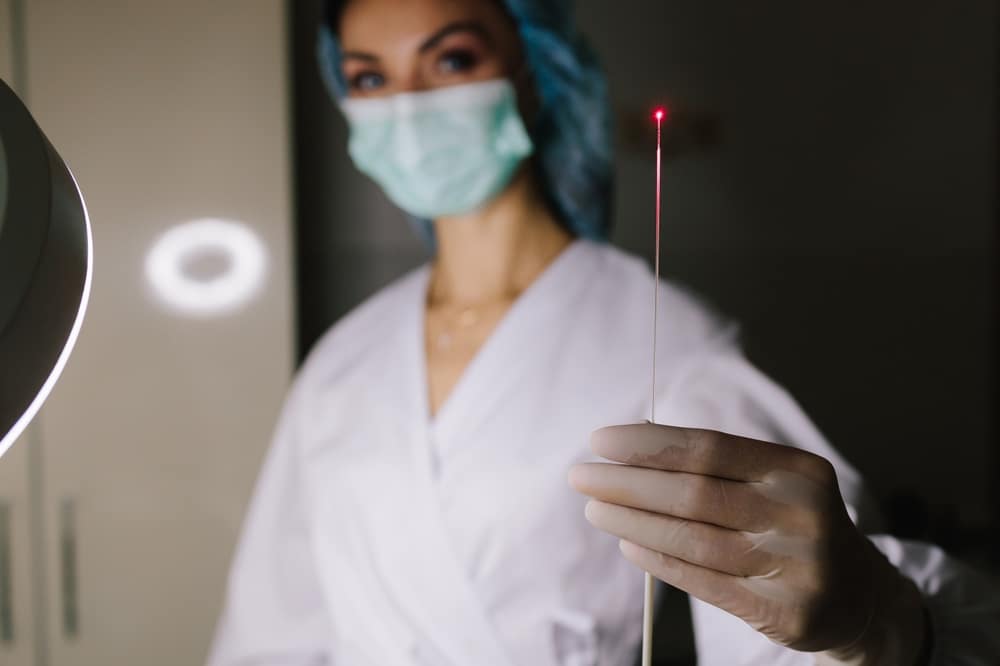
Laser ablation uses laser energy to heat and close the diseased vein. Like RF ablation, the procedure is performed with ultrasound guidance and uses a thin fiber placed inside the vein.
Both treatments share the same goal: closing the problem vein so blood can flow through healthier pathways. The main difference is the type of heat energy used. RF ablation uses radiofrequency energy, while laser ablation uses laser energy.
Which Vein Treatment Is Right For You?
Choosing between RF ablation and laser ablation begins with a careful assessment of the underlying vein problem. While both treatments can close diseased veins, the better option depends on what the ultrasound shows and what the patient needs from treatment.
A provider may consider:
- The size and depth of the affected vein
- How straight or curved the vein is
- The severity of backward blood flow
- The patient’s symptoms and comfort level
- Recovery needs and long-term treatment goals
This helps create a treatment plan based on the patient’s vein anatomy, symptoms, and overall health, rather than a one-size-fits-all approach.
Learn About Thermal Vein Treatment in Honolulu, HI
RF ablation and laser ablation can both treat certain varicose veins, but the right option depends on a detailed vein evaluation. To schedule a consultation at Hawaii Vein Institute and learn more about endovenous thermal ablation, call 808-949-8346.